
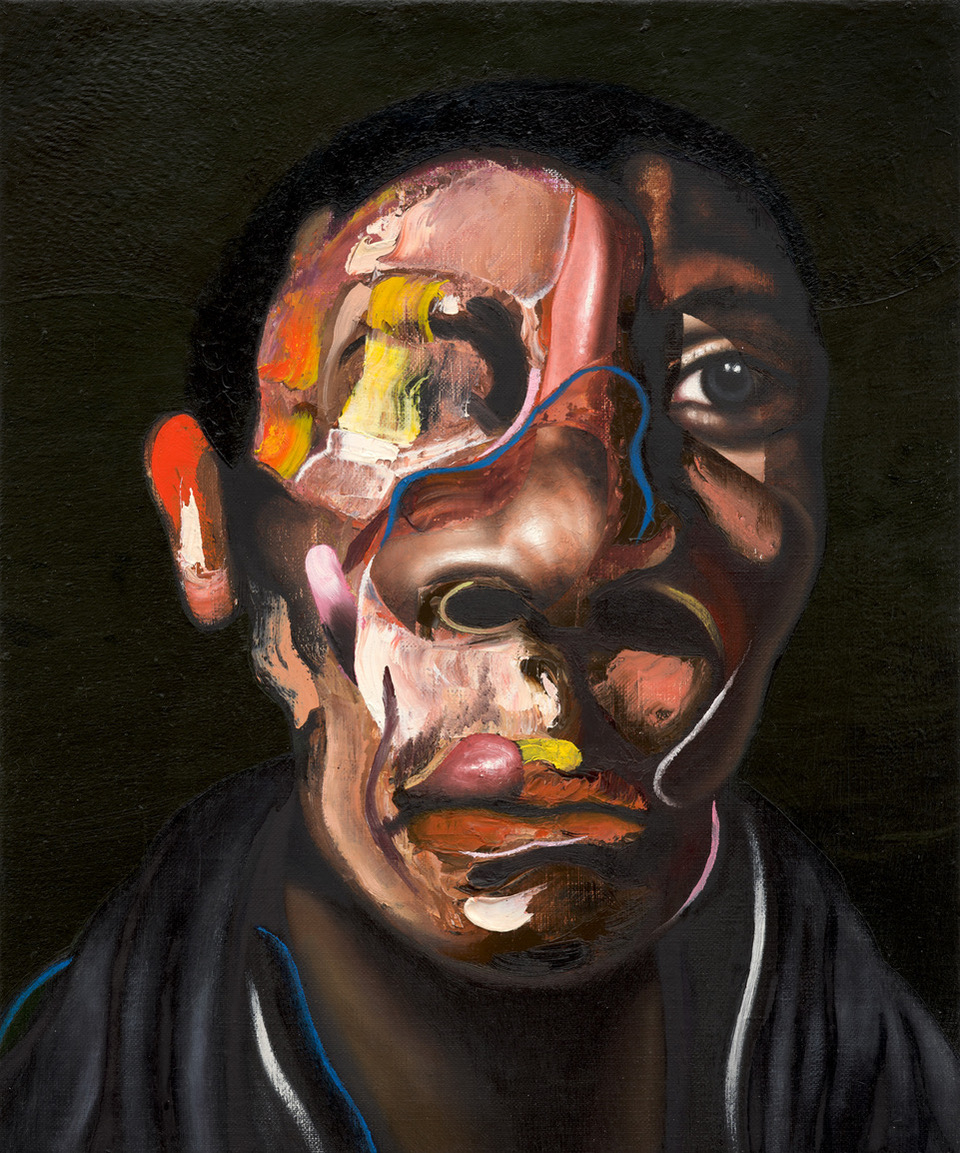
Gagosian Gallery: Nathaniel Mary Quinn - Echoes from Copeland (9/10–10/25/2025)
Hauser and Wirth: Ambera Wellmann - Darkling (9/5 – 10/25/2025)
Company: Ambera Wellmann - One thousand Emotions (9/5 – 10/25/2025)
Marianne Boesky Gallery: Celeste Rapone - Some Weather (9/4 – 10/18/2025)
Nathaniel Mary Quinn explores personal, family, and historic narratives in twelve intense new oil and oil pastel paintings on linen, where he uncompromisingly excavates pictorial planes in his search below surfaces for the underlying, intrinsic, emotionally charged forms that spur and motivate his life and his art. His meticulous, exquisitely composed vision displays a strong formal connection to the methods employed by Francis Bacon, while also delving deeply into the visceral underpinnings of the personalities he constructs and describes. This is the primary focus of the complex, highly empathetic structures that build the psychological force that each image conveys. Quinn’s mastery of the paint medium and its many possibilities provides a level of expertise that has long been scarce in contemporary art. The intimate works are forcefully compelling and meaningful. Their complexity draws viewers into the process of painting, assaulting their senses to make them experience otherwise subconscious or unexpected feelings.
Quinn’s ability to submerge the main subjects in a revealing context accentuates their truth on a number of levels in their attempts to escape racism, in their efforts to flee poverty in rural and urban America, and in their desire to put the slave heritage that haunts their quest for freedom and equality behind them. His search for self-realization involves a closer look at the circumstances of his dysfunctional family members. The hope and possibility of redemption is inspired by the novel “The Third Life of Grange Copeland,” by Alice Walters.
Quinn’s dynamic blue, red, and yellow hues activate the central themes of his plots to a level of power that sensually engulfs the viewer. The combination of black and white within the maze of the facial forms and features sets the stage for deep introspection and personal tandem feelings one may relate to in one’s own family history and experience. Quinn explores the emotional pain frequently released through the painting process by creating fierce shapes and expressive forms that may function as a healing measure. One can only appreciate the artist’s special ability to transform disturbing-looking structures into unusual embodiments of beauty that grow from facing harsh realities. His distinctive “paint-drawing” technique enlivens the authority of each vignette, where scenes and backdrops express a graphic sensibility that is counterbalanced by his painterly interpretation of the facial features and specific body parts. The show is unique and powerful.
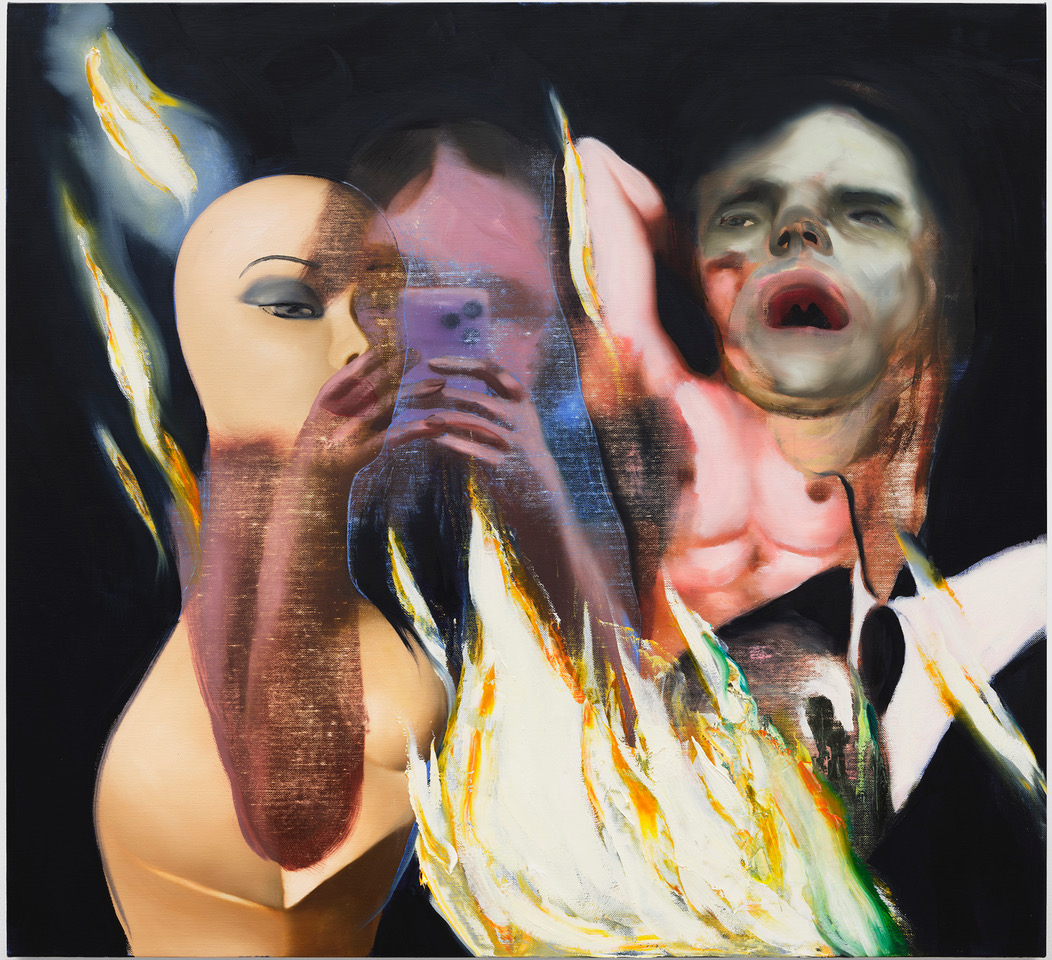
Ambera Wellman’s two current shows in New York overlap in their visual narratives with the “One Thousand Emotions” coming in as an edgy depiction of the destructive forces in former times aimed against women who are discerned to defy societal conventions. In “Darkling,” her seven oil on linen paintings feature masked congregations who have gathered, as in James Ensor’s masked assemblies, to commiserate, to support, or to experience a sense of communal dread that foreshadows the impending apocalypse. Her painting style is semi-representational, not realistic, which provides a successful vehicle for her phantom-like reveries. Wellmann’s visions of the naked and departed, in a feast that hints at an interim stage of the afterlife, seem to refer to a frightening existence devoid of the order to be found in everyday life. These specters and hallucinations relate to the hellish visions of Hieronymus Bosch projected forward into the contemporary mind.
Wellman is one of the present-day artists to visualize and express the unsettling implications of the current world turmoil. The artist’s beautifully rendered works express emotions of terror and foreboding. She intimates in the painting entitled “Siren,” that our original human genesis as sea creatures will become our endgame. Wellmann delves into her personal philosophy to explore the path to oneness with the Universe; her meditations hint that through the release of the ego, we will achieve that unity. She explores personal, societal, historical, and philosophical ideas in forceful, intricate visions set in fraught outdoor settings and in ethereal evocations of mystical, sensual inner worlds.
Wellmann’s show, “One Thousand Emotions,” displays six oil on linen paintings that are connected by photographic and drawn wall imagery in installation formats. Her emotionally charged images are steeped in nudity, sexuality, and flirtation with the spiritual dark side. Wellman evidently intends to conjure the apparitions of disobedient women from dark, unstable ages, who were persecuted as witches and executed as dissenters. Death is depicted as a metaphor for chaos and change. Wellmann has the courage to explore subjects that spark our fears and resistance to the reality that life is transitory, changeable, and fleeting. Her provocative, intriguing work represents a committed intention to bring universal meaning and philosophical content into the contemporary art arena.
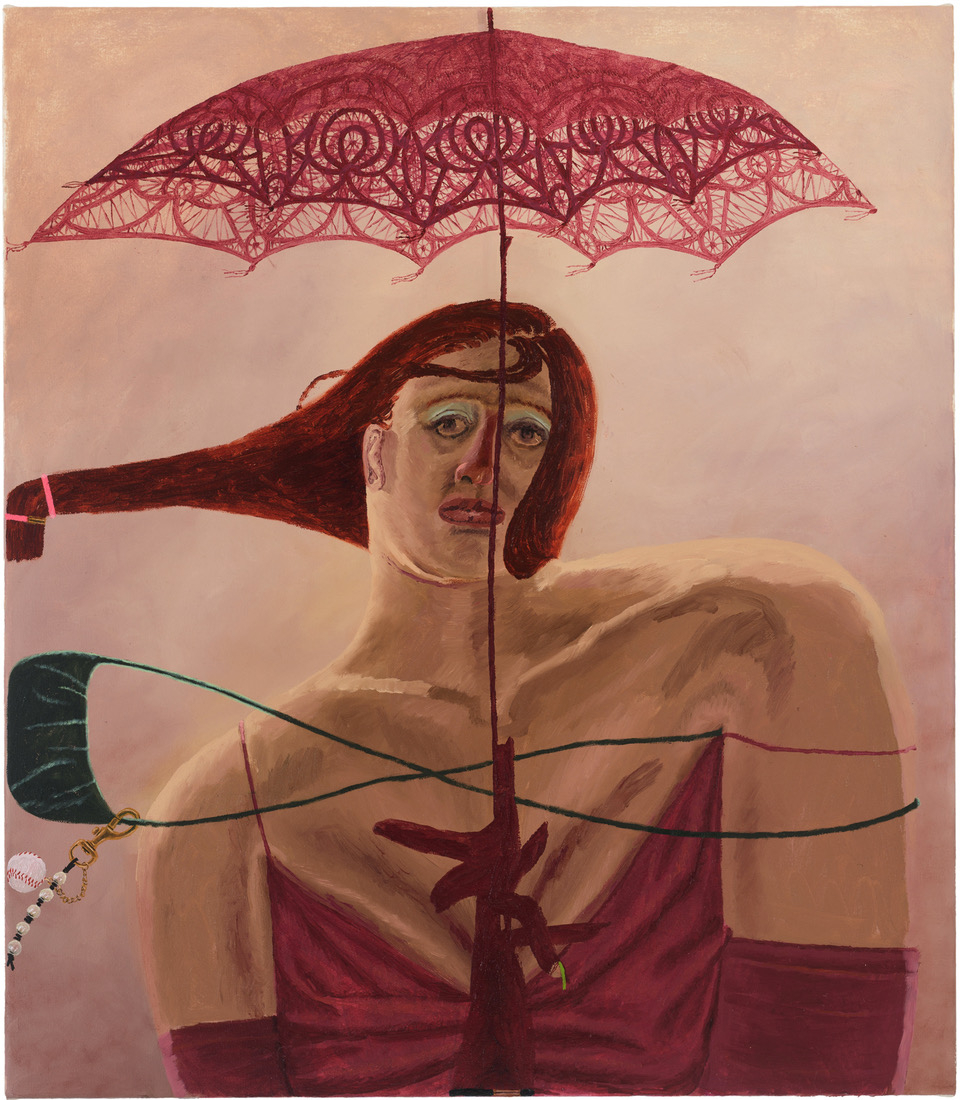
Celeste Rapone’s large-scale oil on canvas paintings, presented in her current show “Some Weather,” provide a clear vision of believable, ultra-personal imagery that describes a quotidian life every viewer can relate to. In an unusual perspective, Rapone infuses her contemporary imagery with art historical spatial interpretations that evoke the work of Cezanne and Modigliani. Her anatomical distortions accentuate an arm around a shoulder or a female figure shuddering as wind blows her hair under an inadequate umbrella. She piles figures on top of each other in what appears to be the morning after an all-night drinking party. Figures in a hot tub swelter red against glowing white bubbling water. Rapone has a very European vision of the figure, where elongated legs or enormous hands call the viewer's attention to the distorted, accentuated anatomical forms. Her colors are muted, sophisticated, moody, and convincing. The facial features seem morose and reserved, not exuberant. A figure wearing a LOVE T-shirt sits with a girl, suggesting the pair is a couple. There is a sense of orderly melancholy in this vision that is quietly believable. The artist paints beautifully; the subtle tones distinguish these paintings. By their extreme introspection, they create a calming effect that allows the viewer to focus on the personalized, elongated distortions. The group formats allude to unsurprising ordinary relationships present in the everyday lives of the majority of people, which provide a sense of community in life. The elegant rendering of the forms puts these works in a category of their own, as a formal achievement well beyond the usual depiction of common objects and normal people. The delicately modeled, unique figures set in distinctive milieus are poetic and mesmerizing.
The three exhibitions reviewed above, as well as the solo shows “Yuan Fang: Spaying” at Skarstedt and Austin Martin White's “Tracing Delusionships” at Petzel, indicate that the windows in Art have been opened to allow fresh air to circulate. The New York Art World seems to be diverging from past constraints, which have long determined the style of art that holds dominance here. There is a refrain from a song from 1963 by British folk-pop duo Chad and Jeremy called “Yesterday’s Gone.” Its sentiment expresses the space and opportunity for the freedom to flourish that is enabling a new trajectory to flow in the Art World. Unrest and chaos in society often spur creativity. I think this is an upbeat time to encourage and foster the daring types of individualized art that are entirely acceptable, very marketable, and above all exciting and engaging.