
Few things are more dispiriting than bad theater. Maybe because the line between those of us in the audience and those performing on stage is so permeable, we can’t help taking personally the striving, the sweat, the failure to make a work of art come to life; the defeat feels visceral, personal, shared. Unsuccessful theater stays with us like a dark cloud, clogging our faith in daily existence.
When theater works, though, it can transport us to another realm—electrify our thoughts, move us to tears and laughter, even awaken hope as we transcend the mortal plane. Good theater can leave us exhilarated and optimistic about infinite, unexplored possibilities.
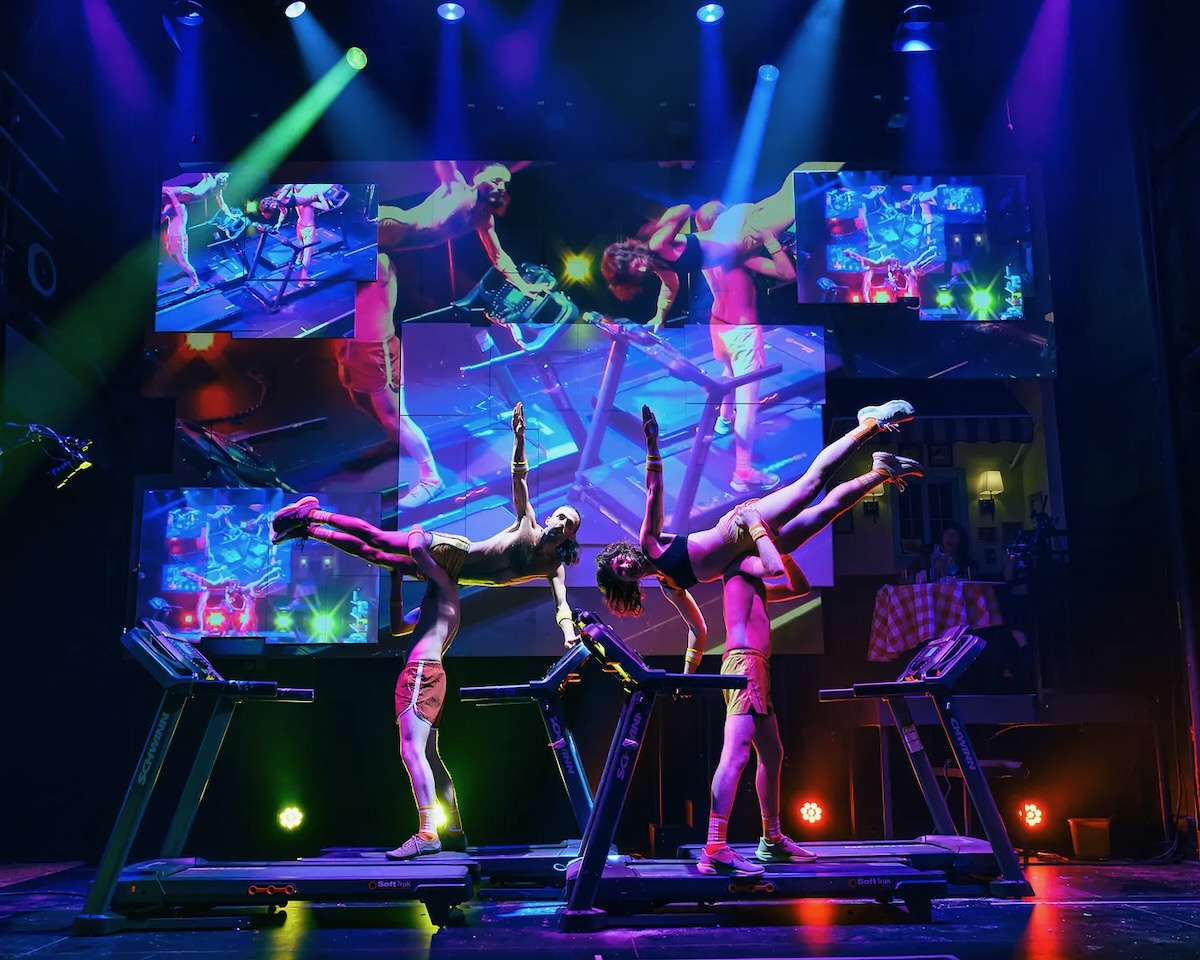
Two works I’ve seen recently have done just that: Deb Margolin’s wacky and winning work-in-progress A Brief History of the Telephone, at the invaluable performance incubator Dixon Place, and the Australian troupe Pony Cam Collective’s wildly sui generis Burnout Paradise, at the Astor Place Theatre.
To call Burnout Paradise a triumph of the human spirit would not be an overstatement. Still, that description fails to convey the wit, exuberance, and off-the-rails silliness of the endeavor. I’d rather not spoil the experience by giving away too many details; suffice it to say that four (heroic) cast members, plus a remarkably patient public-serving emcee, set out to accomplish a series of tasks, with help from audience members eager to make the impossible possible. The result is a performance unlike any you’re likely to see, and a sly, surprising lesson in community.
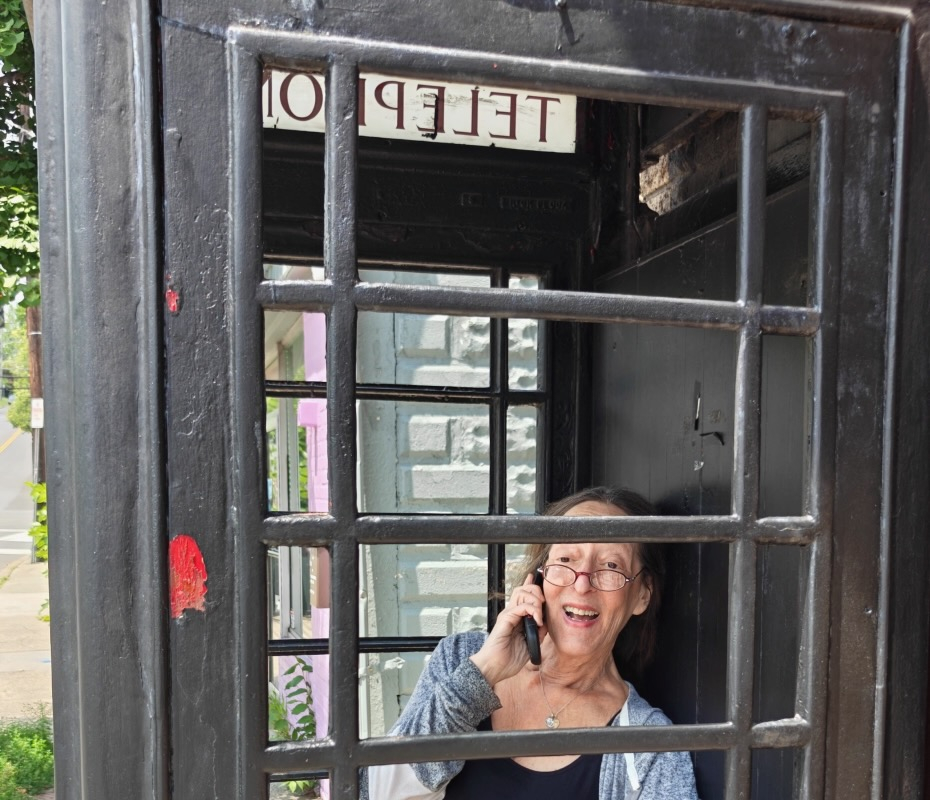
“I have been humbled and embarrassed by my unrequited love of people,” cult Obie-winning playwright Deb Margolin confesses in her wonderfully demented and unexpectedly poignant Telephone. “Requited love is a closed, completed circuit. Unrequited love opens out.”
Margolin’s show bobs and weaves, marrying a sharp comic analysis of a key feature of modern life (“now that the phone is a computer designed to prevent rather than facilitate conversation”) with a giddy memory piece no less astonishing for being true. A Brief History of the Telephone is a tribute to the power of childhood imagination, an antidote to our communion-starved present day, and—like Burnout Paradise—a thrilling reinvention of what live performance can do.
You can still see A Brief History of the Telephone if you hurry: only two performances left! Burnout Paradise runs through June 28.