
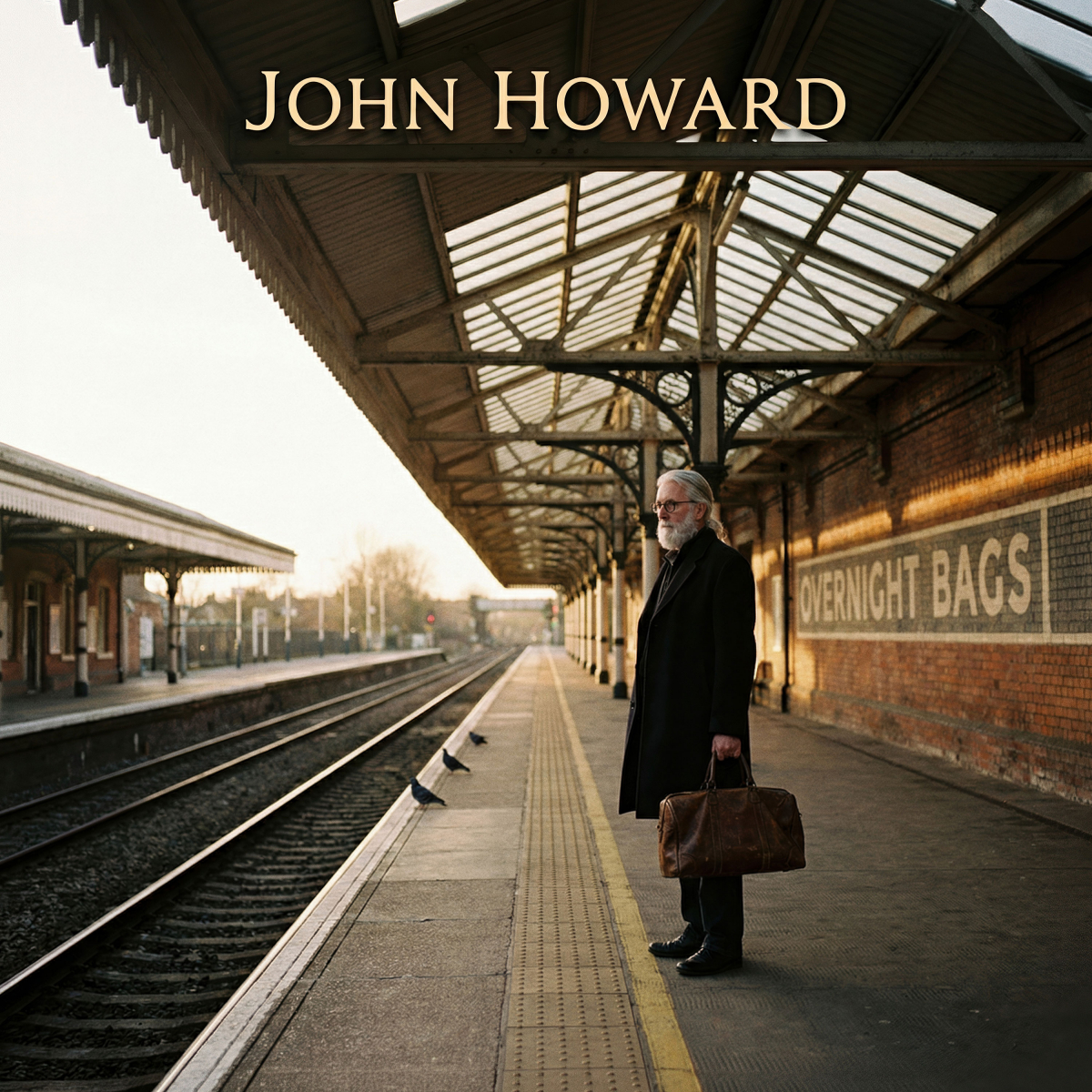
JOHN HOWARD: Overnight Bags (Think Like A Key)
From that foreign place known as the past, English singer-songwriter John Howard has magically conjured up an album of quiet nostalgia, but surprisingly little resentment or regret. A beautiful exercise of the kind an artist can afford when no longer pandering to the expectations of those dreaded men in suits. Expansive, eloquent and evocative, it presents a gentle sequence of cascading postcards. Images and lines that will caress and gently haunt the souls of those fortunate enough to experience its understatement and artistry.
"Chelsea in the morning
Everybody looking good
And glad to greet the day
Mama Cass is playing Sergeant Pepper
Through her open window
Singing harmonies with Rita Meter Maid
They'll never take away
The Crazy Chelsea Daze"
And so, the stories begin with "Chelsea Daze," a piece heady with sixties verve in a McCartney-flavoured Music Hall setting that references scenarios now marooned in the amber of the decade's pop mythology. A consequence of nods and winks and "say no more."
The theme of better days and that passing of the years is evoked in "Songs Of Old Times," which delivers a maudlin and poetic eloquence based on characters who once frequented an old pub, and would occasionally burst forth with an impromptu song. Were Billy Joel English, the lady in question could have been his creation, or from the achingly empathetic pen of the late Shel Silverstein.
"I was once a beauty
My hair was golden as the midday sun
I lay with those who needed comfort
And with a kiss as they slept, I was gone"
There's a dreamlike ambiance, a lullaby with a darkly lyrical edge that is almost psalm-like, to "In The Pursuit Of Love." The song sways, swirls, and almost hypnotizes with its mildly dervish-like chant, with darkness at its heart.
"Love scars and it wounds
It teases and grooms me
It sails me on seas
Then leaves and maroons me"
"Abbey Road, April 1974" is Howard's autobiographical paean to a dream realized, his sublime recollection of a long-wished-for moment, the recording of his songs in that legendary place. Possessed of an up-tempo cheekiness, it sounds reminiscent of The Zombies with a sly glance of acknowledgment to the Fab Four.
"This is the day of your life
The day you arrived into light
This is the day of your life
The day you surmised to make things right"
"A Painter's Gift (In Brushed Imaginings)" has chamber-baroque shadings. Wistful and haunting, but belied by an undertow of classicism. Those piano lessons were not wasted on young Master Howard. A certain refinement and prophetic nuance inhabits the lyric.
"When tales we told through a painter's gift
The headlands swept elsewhere
What memories joined the flood
The shores lifeblood
A watercolor wash
Of a child's imaginings
In brushed imaginings"
Dusty Springfield could have effortlessly bathed in the pop froth of "Look At Life" with the assistance of a full orchestral setting in sass, swing and sixties gusto. It is a cavalcade of evocations. A casual masterpiece, it doesn't overstay its welcome.
"Watching in a cafe
All the conversations going on
Some of them seem angry
Others holding hands in love's sweet bond
None of them I'll ever know
And wonder as they go
What futures they have planned or simply long for"
A sunny, breezy deceptiveness of tone sweetens the sorrow touched upon in "What God Is This." That dreadful loss of a briefly youthful sense of permanence, cut even shorter by the scythe of AIDS. A carefree generation eclipsed and bowed. The title casually confronts the lack of divinity in God's followers who saw the disease as a rightful plague—the lack of grace and compassion from those supposed to exemplify those attributes.
"Tomorrow was never a place we looked for
Just lived for the moment
The urge to explore
Till the waters swept
The bodies from the shore"
There's a conversational take reminiscent of early Gilbert O'Sullivan, with a waltz-like motif and a host of polaroid-captured moments in "A Room At The Top," suggestions and themes, like questions or prayers.
"In the old attic window
I saw someone laughing
Or was it a reflection of a bird in full song"
"My Father's Prayer" has the irony of seeming like a show tune at the end of a theatrical event, and in a way it is since it reflects upon Howard's gentle and genial father, a fellow musician, and his disappearance within Alzheimer's. A piece of emotional scope and wide musical range, it is as complex as its subject matter.
"All of the people who healed
And then fractured me
Have all just abandoned me
Like a drunk in a bar
In the early hours of the morning
I look at the sky
Waiting for shooting stars waving goodbye"
We all have friends we wonder about, people who disappear but linger in the mind as a source of inner smiles. "Josie, Do You Remember?" stitches together a delightful series of diligent vignettes. Worldly wise without being world weary, a perfect reconsidering of the lost strands of an important soul, a letter of distance and longing dressed as a song.
"Josie, I've been wondering
If you're still out there and laughing
At the way your life is raveling
In the hurricane you made"
"Overnight Bags" is the closer and the title piece. A moody gem based on an actor's life on the road, it applies to anyone who performs and then moves on. Pure Howard in scope and pathos, a weaving and a wavering of eloquent reflections, it seems a kitchen sink melodrama in black and white worthy of the dulcet tones of Scott Walker, were he still here.
"We'll go down many roads
Past lives we'll never know
That brush against us
With the promise of possibilities"
If this collection of songs were to receive the acknowledgment it merits, justly and fairly, the album would be lauded, feted and observed. A discreet treasure of unfussy delights, it consolidates Howard as a master of his craft. A glam survivor from the early seventies now in his seventies, bedecked by a fabulous beard that should be embellished with glitter and stars, he remains a creative force to be reckoned with.
As Mr Ferry once so archly intoned, "A Fabulous Creation."