
There’s a moment late in Bubba Weiler’s dramedy Well, I’ll Let You Go where you can hear the audience gasp. A young woman we’ve just met blurts out a piece of information that upends everything we’ve been told so far. It’s a satisfying shock in a play that’s mostly been a tease, parsing out (in small portions) the details of its central mystery: How was a beloved husband and pillar of the community killed, and what events led to his “hero’s” death?
One rewrite away from coalescing into something magical, Well feels like a short story transposed to the stage, sometimes inventively, sometimes sluggishly. The writing and characters are often distinct, funny, and unexpected, and the story becomes especially strong in its final quarter, when uneven storytelling gives way to revelatory plot twists, beautifully written and acted, that awaken the audience—as well as the play’s numb lead.
Until that last lap, Well doesn’t quite cohere in tone and pacing, thanks in part to an overdetermined framing device that undercuts opportunities for actors to bring their own drama and nuance, and a stalled opening scene featuring a character of no discernible value, dramatic or otherwise.
The cast is almost uniformly wonderful: Lortel/Obie winner Emily Davis is heartbreaking; Constance Schulman is comically delicious; and Danny McCarthy, Cricket Brown, and Amelia Workman give compelling, emotionally resonant performances of characters we haven’t seen before. Narrator Matthew Maher shines brightest in a wordless scene that almost justifies the play’s Our Town–inspired framework; the actor seems more comfortable inhabiting a role than carrying the weight of exposition. As the play’s dazed, grieving widow, Obie Award winner Quincy Tyler Bernstine moves in rare moments of anger or radiant happiness, but I couldn’t help wishing she had imbued her character’s fugue state with more emotional color.

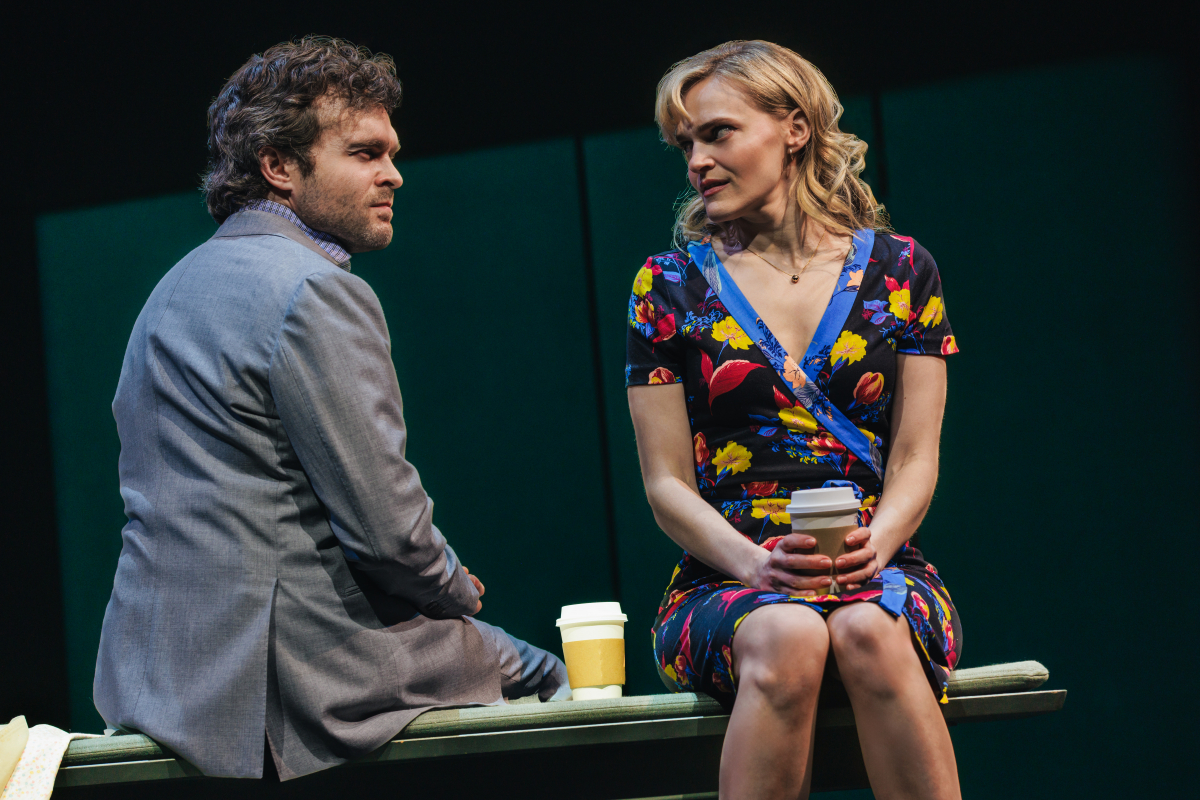
By contrast, there is not one moment in Gina Gionfriddo’s searing, sensational Becky Shaw that could possibly be improved. Arriving on Broadway almost twenty years after the regional/Off Broadway debut that got it nominated for a Pulitzer that it deserved to win. This electrifying production creates the kind of magic that’s rare on any stage. All it takes, apparently, is a dazzling script that continually surprises; a fleet, ingenious staging that renders even the scene changes exhilarating; and a remarkable cast fully up to the task of reaching the black-comic heights and emotional depths created for them.
A dysfunctional-extended-family drama that defies categorization—and gravity—Becky is a twisty, twisted ride, here scathingly funny, there unexpectedly moving. At every turn, the actors soar: from Lauren Patten’s highly strung seeker, a challenging character perfectly embodied, to her devoted beta husband, an initially puzzling choice who, in a nuanced Patrick Ball’s hands, will prove to contain multitudes; from the chillingly droll Linda Emond to the chillingly sly Madeleine Brewer, a Machiavelli in a summer frock. In a role first made irresistible by a silky, manipulative Thomas Sadoski, Alden Ehrenreich bears down without letting up, until the one player he can’t seem to beat creates fault lines in his armor, to devastating effect. Becky leaves him on a precipice, the play that bears her name stunning in every sense of the word.