
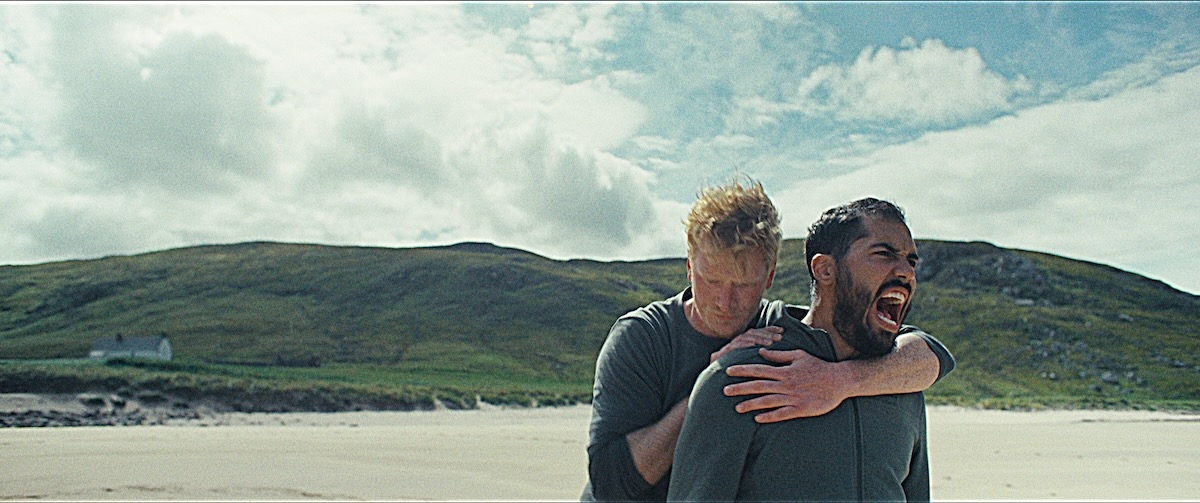
Endurance is the theme of the new film The North. Physical endurance by way of a 350-mile hike through the Scottish Highlands. Endurance that tests the bonds of friendship. And endurance of spirit, how far will you go with a secret inside you? The walk is, of course, a metaphor, but one that is enthralling and well executed.
Boyhood friends, now approaching thirty, embark on the 30-day trek. All starts out well: they are polite and deferential. Chris (Bart Harder), strapping and red-headed, is married, planning a family, and beset by a business that keeps calling him along the way. Lluis (Carles Pulido) is swarthy, unattached, and more upbeat. “Even a bad day in nature is better than a good one at the office,” he tells Chris. The pair are frequently seen as REI candy-colored specks dwarfed by a vast expanse of green, rolling hills. There is rarely anyone else in sight.
They do run into other hikers, at rest stops and in the few towns they pass through. But mostly they are alone with each other and with their thoughts. For all the camaraderie they don’t talk much about important matters. They walk, sleep in a lightweight tent, go through sun, fog, relentless rain and crippling wind.
Lluis’ knees give out and Chris goes on by himself, left alone with his thoughts and the concern—for Lluis, for his life—shows on his face. Lluis meets up eventually, with maps, insisting that they will fare better without their phones and GPS, like the pioneers did. Fellow travelers comment on their sleeping in the same tent: “You must be really close. Or hate each other.” Lluis casually reveals to one stranger a medical diagnosis he had never told Chris. That startles him; how could Chris not have known?
The filmmaking of The North is straightforward and unassuming. Director/writer Bart Schrijver lets the locations speak for themselves, the desolate and unforgiving beauty of the West Highland Way and Cape Wrath Trail, Likewise the acting: Mr. Harder and Mr. Pulido are both understated and naturalistic, an unlikely couple and increasingly sympatico to each other. The trip tests their bond. They show the fatigue of people who are too close for too long.
The smartphone is a player in all this. Technology imposes itself in modern ways. When Lluis ditches GPS, they flail. Poor Chris gets shrill calls from work at the most inconvenient times. Still, the very lightness and stealth of the technology and the equipment used in the filmmaking makes the narrative immersive. We glide alongside the men (interesting shots here of depth of focus), not giving a thought of the camera’s presence. I wouldn’t be surprised to find out that some shots were done on the phone as well.
Set pieces are subtle and effective; a dark interlude sequestered in the tent as rain pours down; Chris, annoyed, striding along the beach, tosses off his backpack, walks on then thinks better of it and goes back to retrieve it; Lluis’ eventual submission to his pain is heartbreaking exactly because it sidesteps conventional drama.
Director Bart Schrijver’s adeptness at second unit work contribute to his eye here helming a feature. He is known also for Human Nature (2022).
____________________________________________
The North. Directed by Bart Schrijver. 2025. Distributed by Tull Stories. Runtime 130 minutes.